SYMPOSIUM
UNQUIET AS
IT’S KEPT:
ART
AND THE
AFTERLIVES
OF HISTORY
November 6, 6pm–8pm
Free. Advance registration recommended.
West School Building Hall
Keio University Mita Campus
With so much information at our fingertips today it can feel as though history is more contested than ever. Social media puts forth a constant churn of competing grievances, while news outlets report on political regimes facing off against universities, museums, and other research institutions about how to tell national narratives, and the global revival of great power politics suggests a willful disregard among world leaders for the lessons of the past. And the art world is in the thick of it. Disputes over history obtain heightened public visibility through art and its adjacent fields, as repeatedly seen in incidents of censorship, protests, and cancellations, including in the taking down, putting up, and altering of monuments.
At first glance such conditions would seem to be inconducive to contemporary art activity, encouraging institutions and artists alike to retreat into risk management rather than lean in to risk taking. Yet contemporary art is surprisingly well-equipped to both weather acts of iconoclasm and counter viral propaganda driven by meme machines and AI slop. After all, the anti-image is as much a part of its DNA as image making, and delay as much a function of its temporal effects as immediacy. Could it be that there is no better place than the art world for interrogating our unquiet present? How can we adapt art’s capacity for memory making to respond to an increasingly fraught discursive environment?
This year’s AWT Talks Symposium brings together three international curators who are developing new approaches for engaging with and examining the afterlives of history through contemporary art: Gen Adachi, an art historian and critic based in Tokyo; X Zhu-Nowell, the executive director and chief curator of the Rockbund Art Museum, Shanghai; and Rasha Salti, a writer, researcher, and curatorial advisor for the 61st Venice Biennale.
Adachi was the lead organizer of “Mochizuki Katsura: The One Who Underpins Freedom” (2025–26), a collective exhibition project engaging curators, artists, archivists, local community members, and other contributors in reassessing the career of the eponymous artist and activist, who made history as part of the pioneering avant-garde group Kokuyokai before fading into obscurity after World War II. Zhu-Nowell, who is also curating this year’s AWT Video program, recently cocurated “The Great Camouflage” (2025–26), an exhibition revisiting the overlooked transnational ties between Black radical thought and revolutionary politics in Asia in the 20th century. Salti cocurated “Past Disquiet” (2015–25), an archival exhibition on “The International Art Exhibition for Palestine” (1978) that has spent the past decade touring major museums on multiple continents, and she was also a curatorial advisor for this year’s 61st Venice Biennale, directed by the late Koyo Kouoh. Amid historic geopolitical upheaval, the Biennale’s vision of “In Minor Keys” suggests a way forward in asserting that listening to “the quiet tones, the lower frequencies, [and] hums” can open up portals to “intimate and convivial universes that refresh and sustain even in terrible times.”
The symposium will be held in English with simultaneous translation into Japanese.
The AWT Talks Symposium is organized by Andrew Maerkle and Yuko Shiomi for Art Week Tokyo in conjunction with the Keio University Art Center and Keio Museum Commons.
SPEAKERS
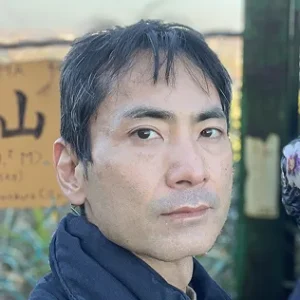
GEN ADACHI
Historian of art and society; Director, Mochizuki Katsura Research Collective
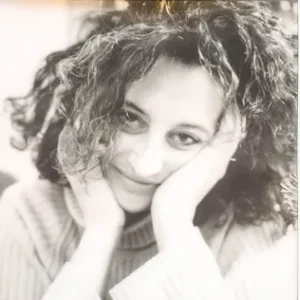
RASHA SALTI
Researcher, writer, and curator; Advisor to the Artistic Director, 61st Venice Biennale
X ZHU-NOWELL
Executive Director and Chief Curator, Rockbund Art Museum, Shanghai, and Curator, AWT Video
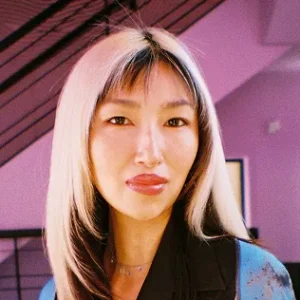
Photo by Sokol
MODERATOR
ANDREW MAERKLE
Editorial Director, Art Week Tokyo
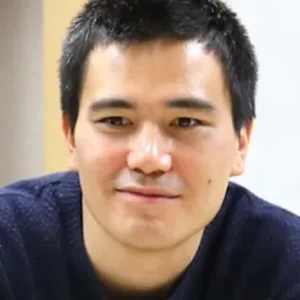
Photo by Yukiko Koshima
VISIT
KEIO UNIVERSITY MITA CAMPUS
November 6, 6pm–8pm
Free. Advance registration recommended.